Before you start
Every activity here is a sit-with-them activity, not a leave-them-to-it one. Coins, buttons, dry dal, bindis and dough are all small enough to choke on, so stay within arm's reach and put them away afterwards. Balloons need extra care — uninflated balloons and burst pieces are the single biggest choking risk among children's products, so keep them for supervised play only and clear away every scrap the moment one pops. Use non-toxic paint for the stamping activities.
Pencil grip & finger strength
The small muscles that hold a pencil are built long before the pencil arrives.
6 activitiesSorting, matching & early maths
Real maths at this age is grouping, comparing and noticing patterns — not numbers.
6 activitiesTalking & listening
Every one of these is a conversation. The talking is the activity.
6 activitiesBig movement & balance
Strong shoulders and a steady middle are what let a child sit still and write later.
7 activitiesTinker Cubs — screen-free activities for 2 to 3 year olds · tinkercubs.in/blog
Nothing that short in this list — try a longer slot.
How to make these actually work
- 1One at a timeSet out a single activity, not five. A tray or a mat gives it a clear start and a clear finish.
- 2Keep it shortAround five minutes of focus at two, and up to ten at three, is completely normal. Stop while they are still enjoying it.
- 3Expect repeatsThe same activity will be requested for weeks. Repetition is not boredom at this age, it is how the skill sets.
- 4Follow the interestAttention stretches a long way when a child picked the activity themselves, and shrinks when they did not.
Want the same progression, without the daily setup?
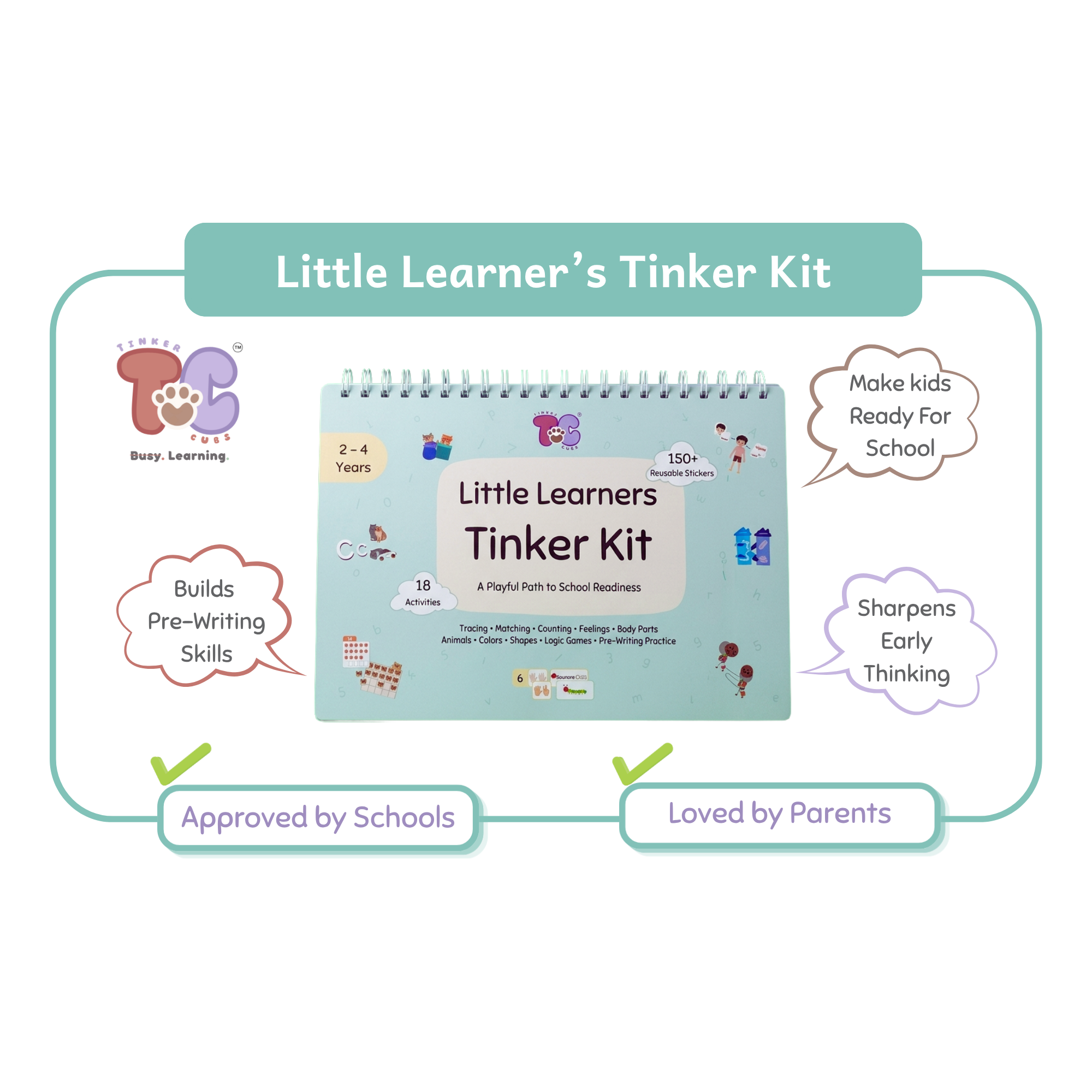
The Little Learners Tinker Kit is 18 activities with reusable stickers, sequenced across the same four skill groups as this guide — so you can hand over one thing instead of building a new one every morning.
See the Tinker Kit